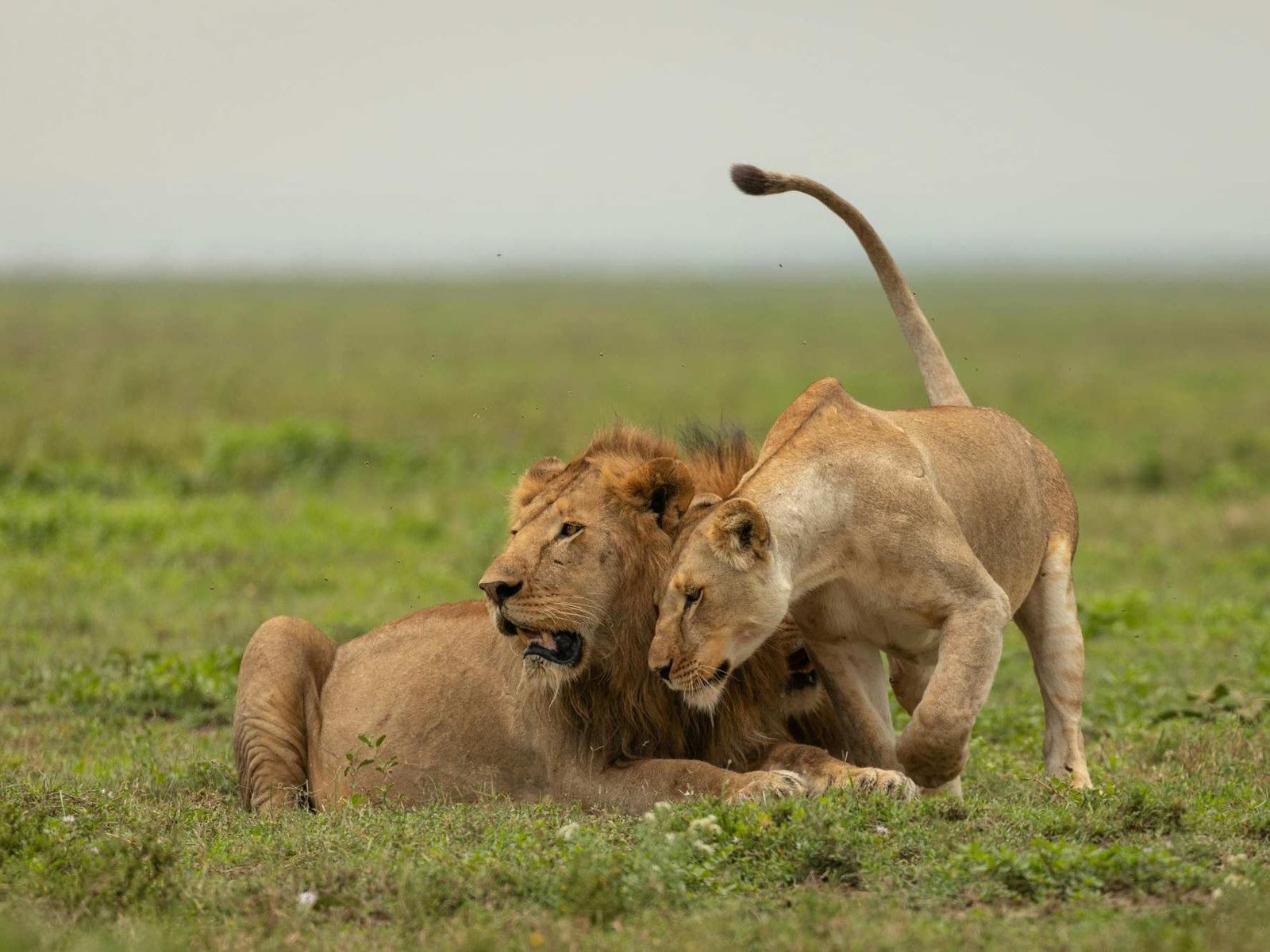
he Ngorongoro and Serengeti safari experience stands as one of the most extraordinary wildlife expeditions on Earth, a journey that transports travelers into a world where ancient landscapes, thriving animal populations, and deep cultural history merge into a breathtaking tapestry of natural wonder, and as your safari begins, the anticipation builds with every mile traveled across the rugged terrain of northern Tanzania, where nature’s raw power and untouched beauty unfold before your eyes in ways that leave lasting impressions on the soul; Ngorongoro, often described as the “Garden of Eden of Africa,” rises like a colossal bowl-shaped sanctuary, formed millions of years ago by the eruption and collapse of a massive volcano, and today, this UNESCO World Heritage Site contains the world’s largest intact volcanic caldera, stretching approximately 20 kilometers across and plunging to depths of over 600 meters, yet enclosed within this natural amphitheater is a thriving ecosystem that supports one of the densest concentrations of wildlife in Africa, including the legendary Big Five—lion, elephant, buffalo, leopard, and the critically endangered black rhino—which makes descending into the crater an emotional moment for many adventurers, as the cool morning mist hovers above the crater rim and slowly lifts to reveal sprawling grasslands dotted with animals grazing freely, while the scattered acacia trees create silhouettes against the rising sun; the descent road spirals along the crater walls, offering spectacular panoramic views that ignite the imagination, and once your safari vehicle reaches the crater floor, the real magic begins as herds of wildebeest and zebra move rhythmically across the plains, lions bask lazily under the morning sunlight, hippos grunt in the shimmering pools of Ngoitokitok Springs, and vast flocks of flamingos paint the soda lake pink, while elephants wander gracefully with their massive tusks gleaming, and all of these encounters happen in an environment so compact yet so rich that at times you feel as though you’re inside a natural wildlife amphitheater curated by nature itself; the crater’s environment is a microcosm of East African ecology, featuring grasslands, freshwater marshes, acacia woodlands, and volcanic formations, which together sustain over 25,000 large mammals year-round, providing safari lovers the rare opportunity to witness predators and prey interacting continuously in a relatively small but self-sustaining habitat, making every minute inside Ngorongoro feel like watching a live and unfiltered wildlife documentary; yet the experience isn’t only about animals, as the land also carries deep cultural significance, home to the Maasai people who still graze their cattle along the crater’s rim and represent a living cultural heritage that enriches the region’s identity, offering visitors a deeper connection to the human history intertwined with these natural landscapes; after spending time exploring the crater, the adventure often continues toward the legendary Serengeti National Park, an expanse that unfolds endlessly as a golden sea of savannah stretching over 14,000 square kilometers and forming one of the world’s most iconic wildlife sanctuaries, where the sheer scale of the landscape, the clarity of the horizon, and the rhythm of the wild create a sense of vastness unlike anything found elsewhere on the planet, and as your vehicle enters the Serengeti, the scenery transforms gradually from volcanic highlands into sweeping plains, dotted with umbrella-shaped acacia trees, rocky kopjes rising from the grasslands, seasonal rivers weaving through the park, and wide open skies that shift in color from pale morning hues to fiery sunsets that leave you speechless; the Serengeti is home to one of Earth’s most astonishing natural phenomena—the Great Migration—where over 1.5 million wildebeest, 200,000 zebras, and thousands of gazelles embark on a circular journey spanning nearly 2,000 kilometers each year, moving through the Serengeti in search of fresh grazing lands and water, and along the way, they face dramatic river crossings filled with powerful currents, lurking crocodiles, and intense predator confrontations that attract wildlife photographers and nature enthusiasts from around the world, especially at iconic sites like the Mara River and Grumeti River, where witnessing hundreds or thousands of animals plunge into the water simultaneously becomes one of the most emotionally powerful and visually spectacular moments one can experience in nature; throughout the Serengeti, wildlife thrives in abundance—the park holds one of the highest densities of lions in Africa, along with cheetahs sprinting across open fields, leopards lounging in trees, giraffes gracefully walking across the horizon, jackals trotting along the plains, hyenas prowling in their distinctive gait, and immense elephant herds making their way through woodlands and river valleys, while vultures and eagles soar overhead, completing a perfectly balanced ecological system that has remained largely unchanged for thousands of years; each region of the Serengeti offers unique safari experiences, such as the Seronera Valley, known as the predator capital due to its permanent water sources attracting big cats year-round, the Central Serengeti with its iconic kopjes featured in films like “The Lion King,” the Western Corridor with its dramatic Grumeti River crossings during migration season, the Northern Serengeti where the Mara River crossing unfolds from July to October, and the Southern Serengeti where calving season occurs between December and March, bringing forth thousands of newborn wildebeest and intense predator activity as lions, cheetahs, and hyenas take advantage of the abundance of prey, making this time one of the best for witnessing the raw, sometimes brutal, yet deeply fascinating cycle of life; and as each day unfolds, moments of absolute serenity alternate with heart-pounding sightings—sunrise game drives where silhouettes of animals appear against the golden dawn, midday encounters with elephants grazing peacefully near waterholes, and evening game drives where nocturnal creatures like servals, civets, and genets emerge into the cooling air, all culminating in nights spent at tented camps or lodges where the sounds of the wild—distant lion roars, hyenas whooping, insects buzzing—create an atmosphere that is both humbling and profound, reminding travelers of humanity’s ancient ties to the natural world; whether you stay in luxury lodges with infinity pools overlooking the plains or in authentic tented camps where lantern-lit pathways lead to your canvas-covered room, the experience becomes immersive and emotionally grounding, blending comfort with the thrill of living amidst wildlife; guides and rangers, whose knowledge of animal behavior, geology, and ecology is extraordinary, elevate the experience by interpreting the landscape, tracking wildlife, and ensuring safety while creating rich storytelling moments that stay with visitors long after the safari ends; in practical terms, the journey often begins from Arusha, the safari capital of Tanzania, where travelers embark on well-planned itineraries that may include 4×4 safari vehicles, packed lunches for long game drives, photography gear, binoculars, and essential items like light jackets for chilly mornings, sun protection for hot afternoons, and comfortable clothing suited for rugged travel; the best time to visit depends on the traveler’s interest—those seeking the Great Migration river crossings often aim for July to October in the Northern Serengeti, while travelers wanting to witness the calving season choose January or February, and travelers wanting pleasant weather year-round choose the dry season months of June to October, though the short rains of November or the green season from March to May offer beautifully lush landscapes and fewer crowds; permits and park fees contribute to conservation efforts that protect wildlife populations and support community development, while responsible tourism practices—like keeping a respectful distance from animals, avoiding single-use plastics, and supporting local communities—ensure that future generations can continue to enjoy these extraordinary landscapes; cultural visits with the Maasai add another layer of enrichment, offering insight into their traditions, warrior heritage, beadwork artistry, and pastoral lifestyle, while also encouraging cultural exchange and mutual respect; the journey between Ngorongoro and Serengeti typically spans the Ndutu region, a breathtaking transitional zone that combines the best elements of both ecosystems, with open plains, freshwater lakes, seasonal marshes, and forests that attract wildlife throughout the year, especially during the migration’s calving season; driving through the endless plains of the Serengeti evokes a feeling of timelessness, as though the world has paused to allow travelers to witness the planet in its most primal and untouched form, where landscapes stretch to infinity and the horizon curves softly under the African sun, painting scenes that stir emotions and forge memories that remain vivid for a lifetime; and as the safari eventually comes to an end, travelers often describe an overwhelming sense of gratitude for having experienced a place where nature still reigns supreme, where wildlife roams freely in ancient patterns unchanged by time, and where the human heart reconnects with wilderness in a way that is cleansing, inspiring, and profoundly humbling, leaving each visitor with a renewed appreciation for the natural world and a longing to one day return to Tanzania’s majestic Ngorongoro Crater and expansive Serengeti plains—destinations that together form the beating heart of African safari adventures and stand unrivaled as two of the most awe-inspiring wildlife sanctuaries on Earth.